Northern lights
Northern Lights in Iceland: 2026–2027 Guide
The season, the hours, the KP index, the two maps we actually check before driving out, and why February is the…
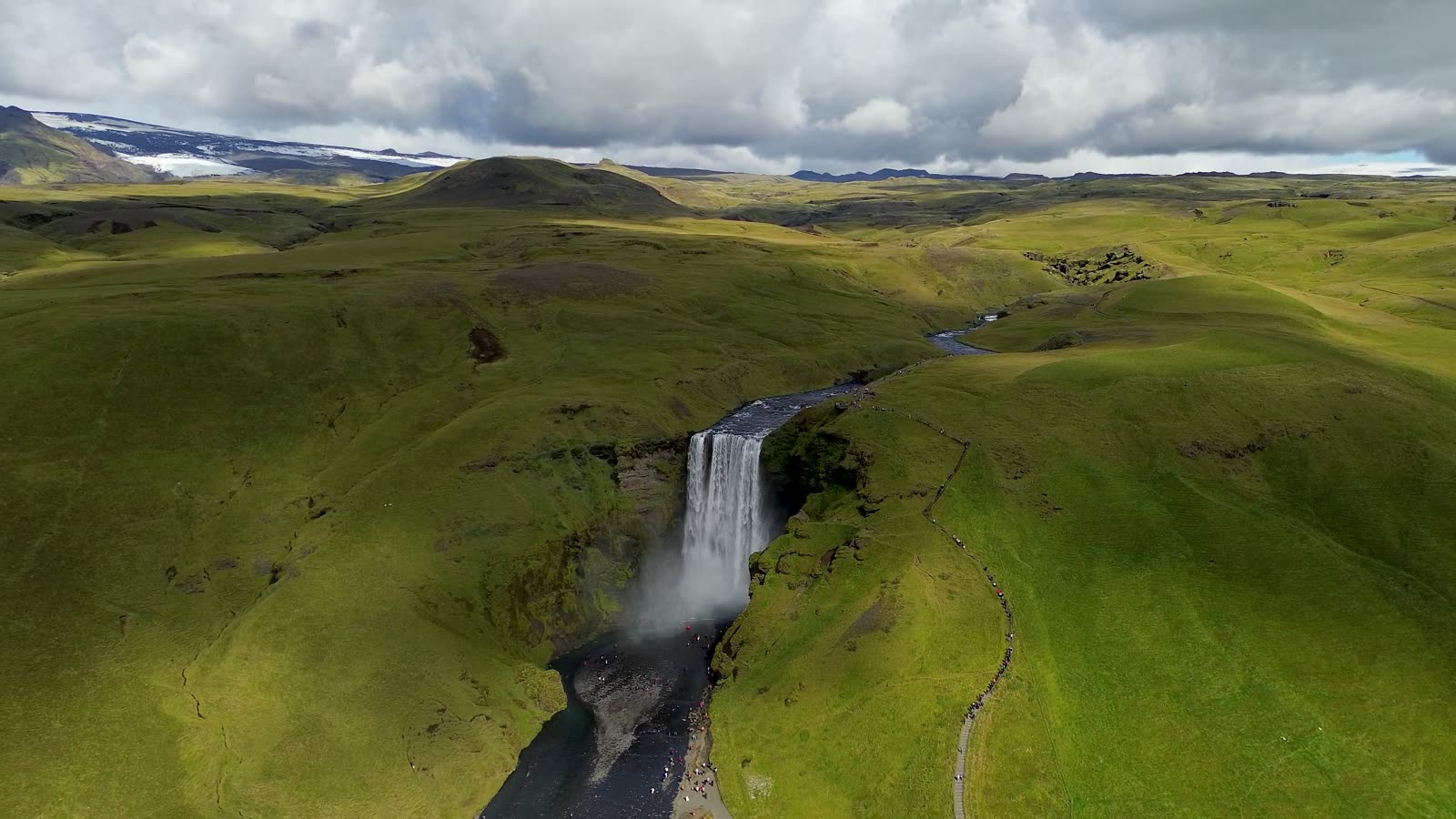
Iceland's most famous route explained stop by stop: what to see at each, how long you need, what time to go to dodge the coaches, and the three extra stops almost nobody makes.
The Golden Circle is the route everyone does, and for once most people are right. It is a 230-kilometre loop from Reykjavík that packs in three things that resemble nothing else: the rift between two tectonic plates, an active geothermal field, and one of Europe's most powerful waterfalls.
It fits into a day. It fits better with a plan.
Two enormous things happen here at once.
The first is geological: Þingvellir sits on the Mid-Atlantic Ridge, the line where the North American and Eurasian plates pull apart about 2 centimetres a year. Almost everywhere else on the planet that boundary is three kilometres under the ocean. Here you walk inside it. The Almannagjá gorge is literally the edge of the North American plate.
The second is historical: in the year 930 the Icelandic chieftains met here and founded the Alþingi, the oldest still-functioning parliament in the world. It convened in this valley for almost nine centuries, outdoors, with the rock wall acting as a natural amplifier.
What to do: walk down through Almannagjá from the Hakið viewpoint to the church. It is 20 minutes downhill and it is the best short walk in Iceland. Car park P1 is the one you want; it costs 1,000 ISK, payable by card or online.
The Great Geysir — the one that gave every geyser on Earth its name — has been essentially dormant for decades. The one you will watch is its neighbour, Strokkur, which erupts every 5 to 10 minutes and throws boiling water 20 to 30 metres up.
Useful advice: always stand upwind. The water leaves the ground above 100 °C and the wind shifts. And start filming before you think you need to — the warning is a blue dome swelling on the surface that lasts less than a second.
Around it is a whole field of boiling pools, steam vents and bubbling mud. Do not leave the marked paths: the crust is thin and what is underneath is at boiling point.
"The golden falls". The Hvítá river, fed by the Langjökull glacier, drops 32 metres in two stepped falls and disappears into a canyon you cannot see from above. The effect is that the river appears to fall into the ground.
There are two viewpoints: the upper, panoramic one, and the lower one, down a staircase, which puts you beside the water. Do both. In winter the lower path can be closed by ice.
Gullfoss still exists because of Sigríður Tómasdóttir, the landowner's daughter, who fought a hydroelectric scheme in the early 20th century that would have drowned the falls — and threatened to throw herself into them. There is a plaque with her face on the upper path.
The big coaches leave Reykjavík between 8:30 and 9:30 and run the loop in the same direction: Þingvellir → Geysir → Gullfoss. If you run it backwards (Gullfoss first) you pass them rather than queue behind them, and you find the sites empty.
In winter the limiting factor is not people, it is light: with four or five hours of day you need to leave early and keep moving, or you reach Gullfoss in the dark.
Waterproof footwear with grip (the Gullfoss path is permanently wet with spray), a windproof jacket, and microspikes between November and March. And an empty bottle: Geysir and Gullfoss both have drinking fountains.
Between 6 and 9 hours from Reykjavík depending on stops. The loop itself is about 230 km.
Yes — the roads are open all year and cleared. Daylight is the constraint: in December and January you get four or five hours.
The three main stops are free. You pay for Þingvellir parking (1,000 ISK) and Kerið crater entry (400 ISK) if you add it.
Every 5 to 10 minutes, fairly reliably. It reaches 20 to 30 metres.
Small groups, bilingual guides, free cancellation.
The season, the hours, the KP index, the two maps we actually check before driving out, and why February is the…
The suitcase that actually works between October and April, written by people who see every week what…
Daylight hours, aurora odds, which roads are open and how busy it gets.
Tell us the dates and how many you are. Plan and price back today.